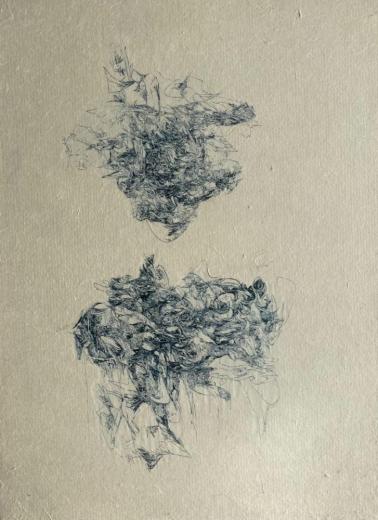
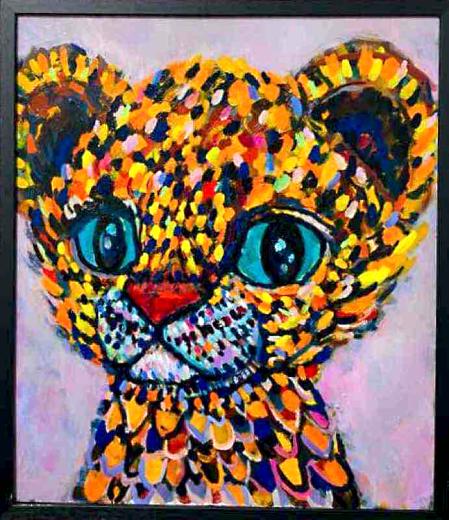
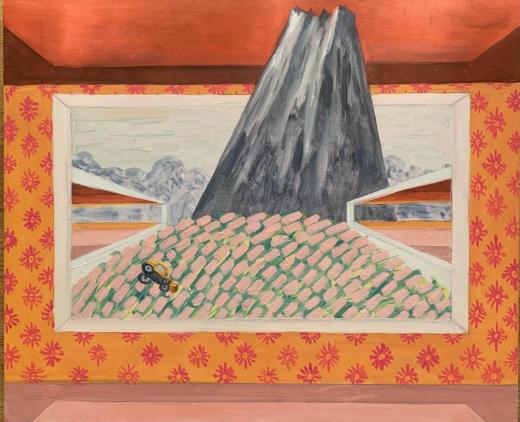
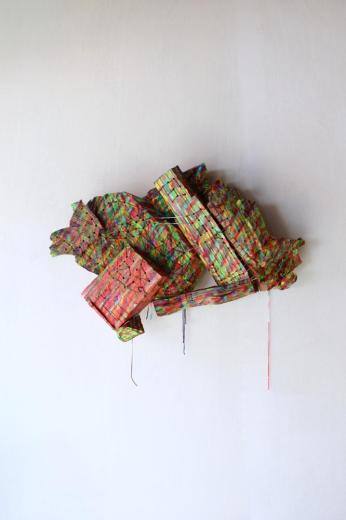
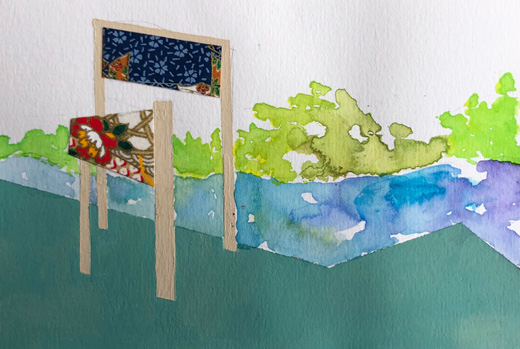
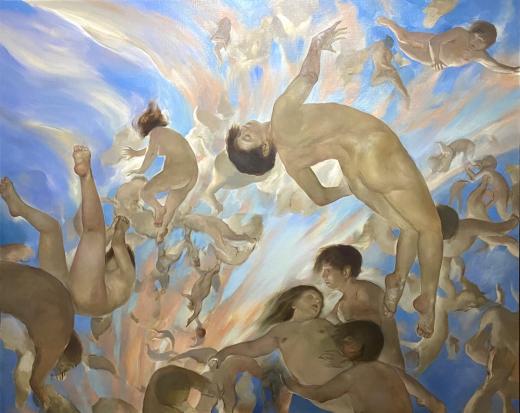
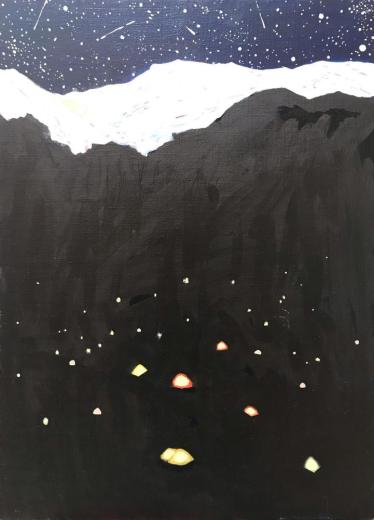
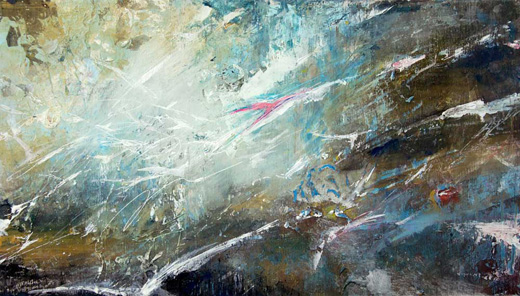
インターネット空間に氾濫するイメージを絵画として再構築する梅沢和木の作品。本作は正反両面にイメージが展開された一点であり、二つの画面が相互に呼応する構造を持つ。
一方の面では、デジタル画像の断片やモザイク状のピクセル、流動する絵具のストロークが交錯し、情報が混線するネット空間の感覚を思わせる視覚的なエネルギーが広がる。もう一方の面では、都市やキャラクター、写真、抽象的な色彩が重層的に組み合わされ、現実世界とデジタル世界の境界が曖昧になった現代の視覚環境を象徴するような画面が構築されている。
梅沢はインターネット上のイメージ、写真、ゲームやアニメーションの視覚言語を引用しながら、それらを手作業の絵画として再構成することで、デジタル時代における「絵画とは何か」を問い続けてきた。本作は、デジタルイメージの奔流と身体的な絵画表現が衝突し融合する、梅沢和木の制作を象徴する作品である。
正反両面にイメージが存在することで、作品は単一の視点に固定されず、見る者の位置や視線によって異なるイメージ体験を生み出す。情報が無限に更新される現代の視覚世界を体現するような、強い存在感を持つ一点である。
This work by Kazuki Umezawa reconstructs the overwhelming flow of images circulating in the internet age through painting. The piece is unique in that both sides of the work present distinct images, creating a structure in which the two surfaces respond to one another.
On one side, fragments of digital imagery, pixelated blocks, and fluid painterly gestures collide, evoking the chaotic visual energy of online information networks. On the other side, urban scenery, characters, photographic elements, and abstract color fields overlap to form a dense composition that reflects the blurred boundary between the physical and digital worlds.
Umezawa’s practice frequently appropriates imagery from the internet, photography, games, and animation, translating them into hand-painted compositions. Through this process, he continuously questions the role of painting in the digital era. In this work, the collision between digital image culture and physical painterly expression becomes especially vivid.
By presenting imagery on both the front and reverse sides, the work resists a single fixed viewpoint, offering different visual experiences depending on the viewer’s position. The result is a powerful piece that embodies the constantly shifting visual landscape of contemporary culture.